Gases in the Atmosphere 2

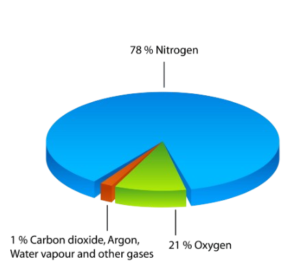
Chart showing the composition of gases in the atmosphere.

1. Oxygen: Oxygen makes up 21% of the air. It is the second most abundant gas after Nitrogen. It is essential for life, burning (combustion), and rusting. It is colorless, odorless, tasteless, and only slightly dissolves in water. For anything to burn, three things are needed: fuel, heat, and oxygen.

2. Nitrogen: Nitrogen makes up 78% of our atmosphere. Its main job is to control the intensity of oxygen; without nitrogen, fires would burn out of control and living things would grow too rapidly. It is a colorless, odorless gas that does not burn or support burning.

3. Carbon Dioxide (CO_2): Along with Argon, Water vapour, and other gases, it makes up about 1% of the air. The “Carbon Cycle” keeps its level steady through photosynthesis and respiration. It also protects us by blocking harmful infrared rays from the sun.

4. Water Vapors: Water vapors enter the air through breathing, sweating, cooking, and evaporation from the sun. A balanced amount of humidity is vital for the survival of both animals and plants.

5. Ammonia: Ammonia is a colorless gas with a very strong smell. It is made of Nitrogen and Hydrogen. While it can be harmful to animals, it is very beneficial for plant growth. It dissolves easily in water.

6. Ozone: Found in very small amounts, Ozone is created by electrical discharges (lightning) and water vapors. It is a natural purifier that helps destroy germs and organic impurities in the air.